Future Living Traditions 01
Future Face-Changing Theatre
Mengnan Gao (Mona) is a designer and artist creating speculative narrative environments through performance, spatial storytelling and emerging technologies.
Draft — Position, Opening Question, Overview and Cultural Context are confirmed. Sections 5–18 of the master case (Personal Entry, Materials, Performance, Outcome, Credits…) are not yet written, and the Role line below still needs to be calibrated against what was done solo versus with collaborators. Nothing here is invented — only what already exists in
00_STRATEGY/04_FFCT_MASTER_CASE.mdis shown.
Position
Future Face-Changing Theatre is the first major work within Mengnan Gao’s ongoing practice, Future Living Traditions. Beginning with Sichuan Opera face-changing, it brings together female-led performance, biomaterial masks, costume, digital interaction and narrative space to explore how a traditionally restricted practice might evolve into a living contemporary cultural system.
Opening Question
Who is allowed to inherit transformation?
The project asks who is permitted to enter, embody and reshape a living tradition.
Overview
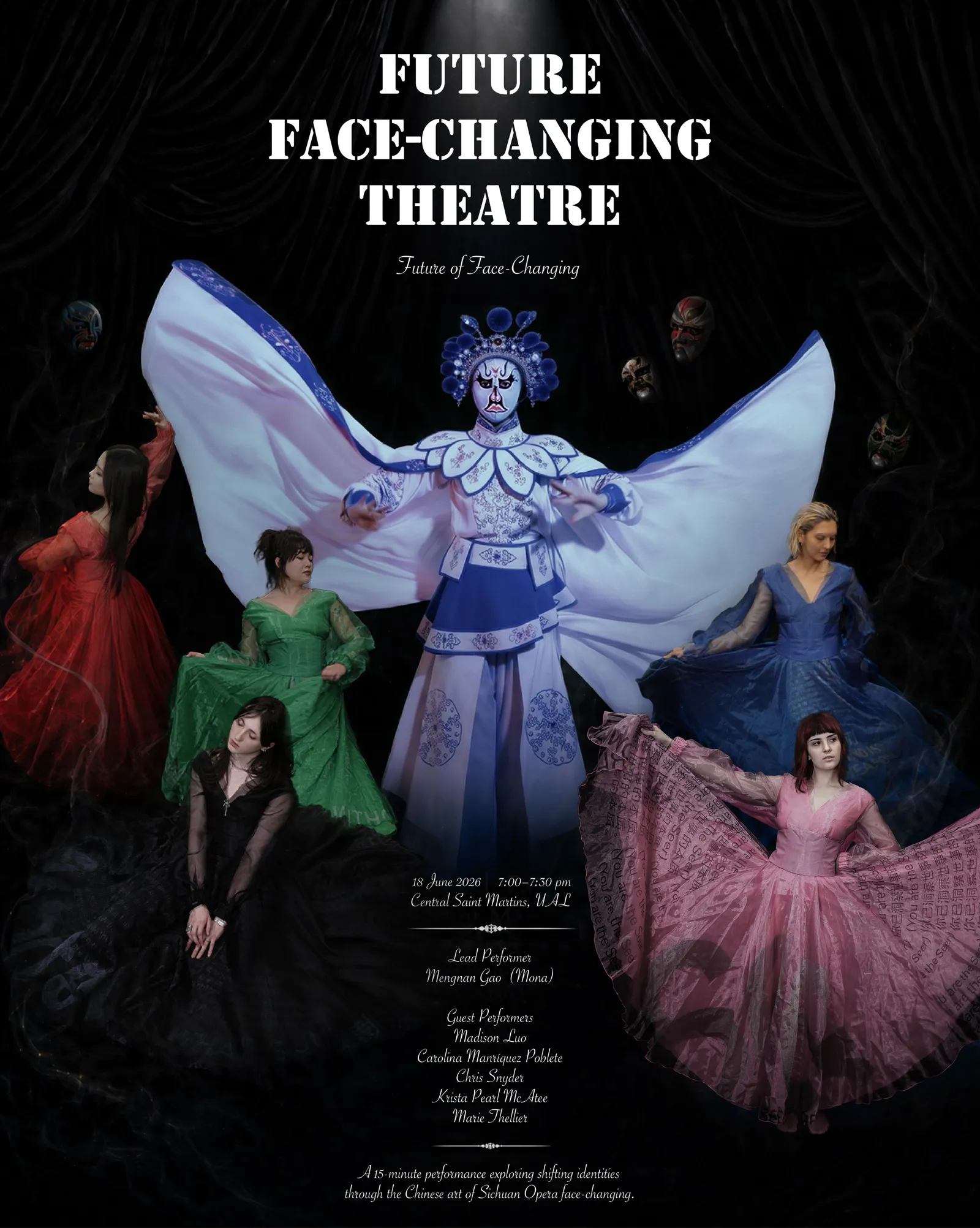
Future Face-Changing Theatre was developed between 2025 and 2026 during my MA in Narrative Environments at Central Saint Martins. Its first major live presentation took place on 18 June 2026 in the MANE Dome at Central Saint Martins, London.
The project grew from my long-standing interest in Sichuan Opera face-changing and from my own fieldwork, apprenticeship and performance training in Chengdu. As I began to enter the practice myself, I came to understand face-changing not only as a performance technique, but as a cultural system shaped by lineage, gender, identity and controlled access. Historical ideas often summarised through the phrase “passed to men rather than women, and to insiders rather than outsiders” led me to ask who is permitted to enter a living tradition and who is able to participate in shaping its future.
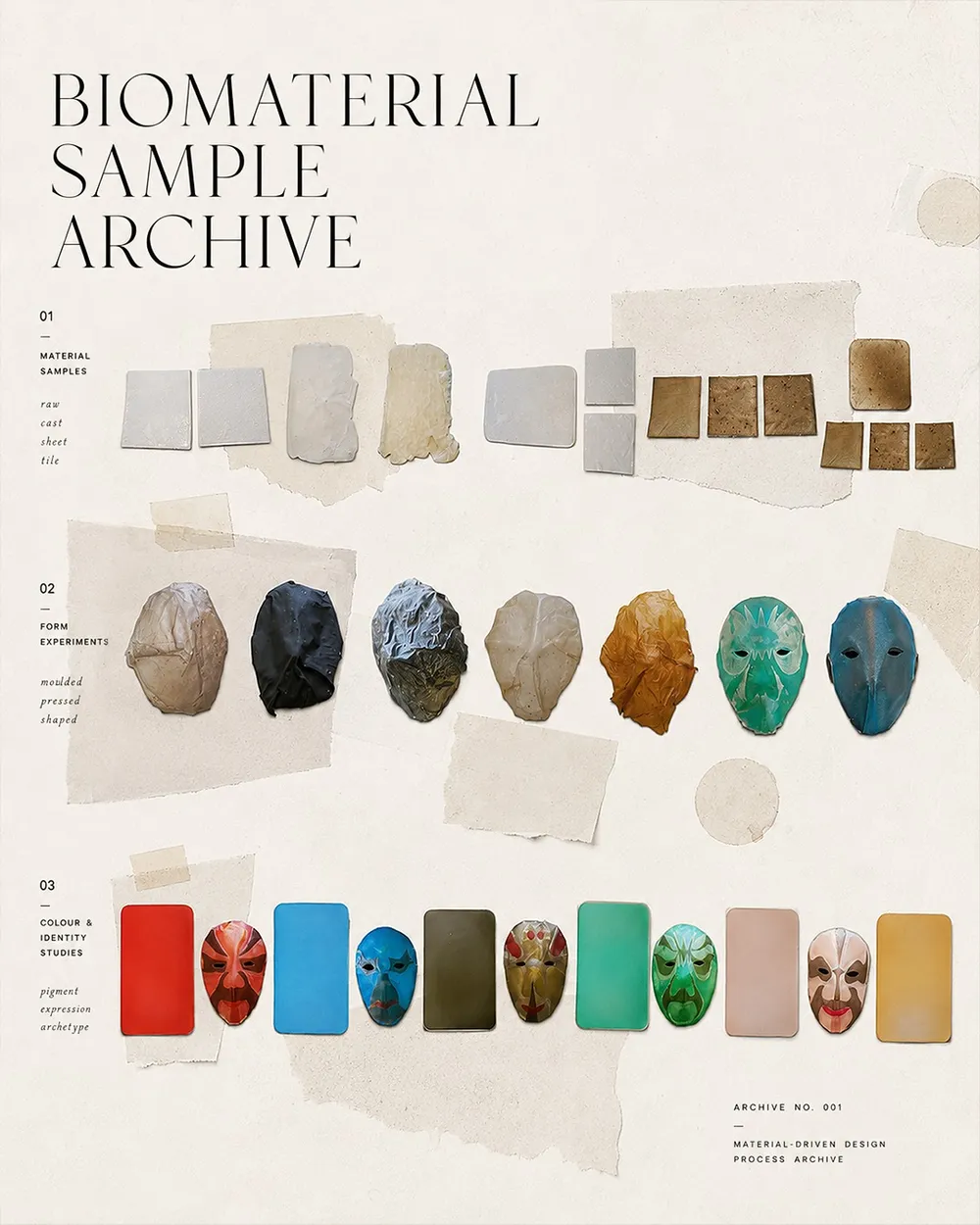
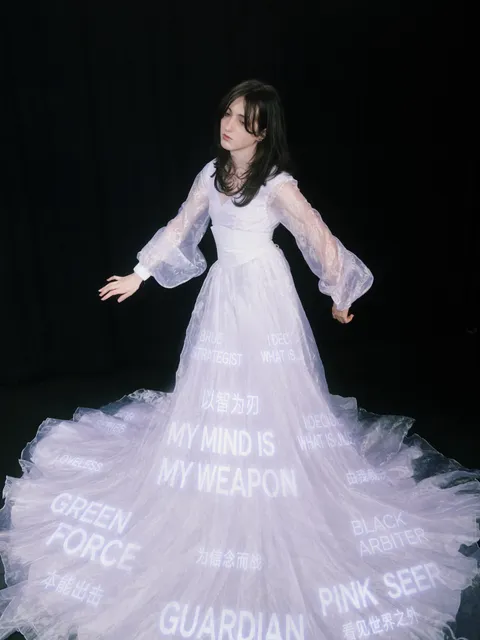
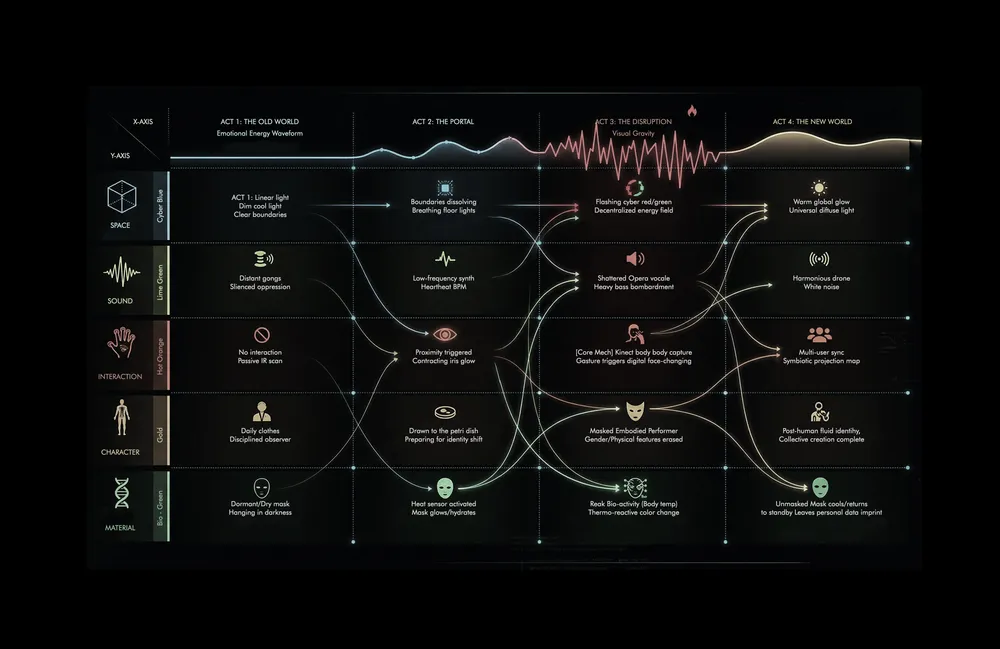
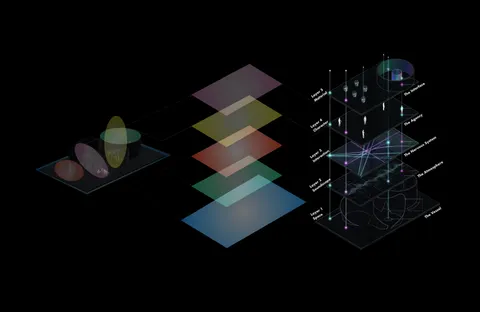
Rather than reproducing a conventional Sichuan Opera stage, the project proposes a female-led bio-digital theatre system. It brings together face-changing practice, a five-colour identity narrative, biomaterial masks, costume, embodied performance, digital interaction and spatial design.
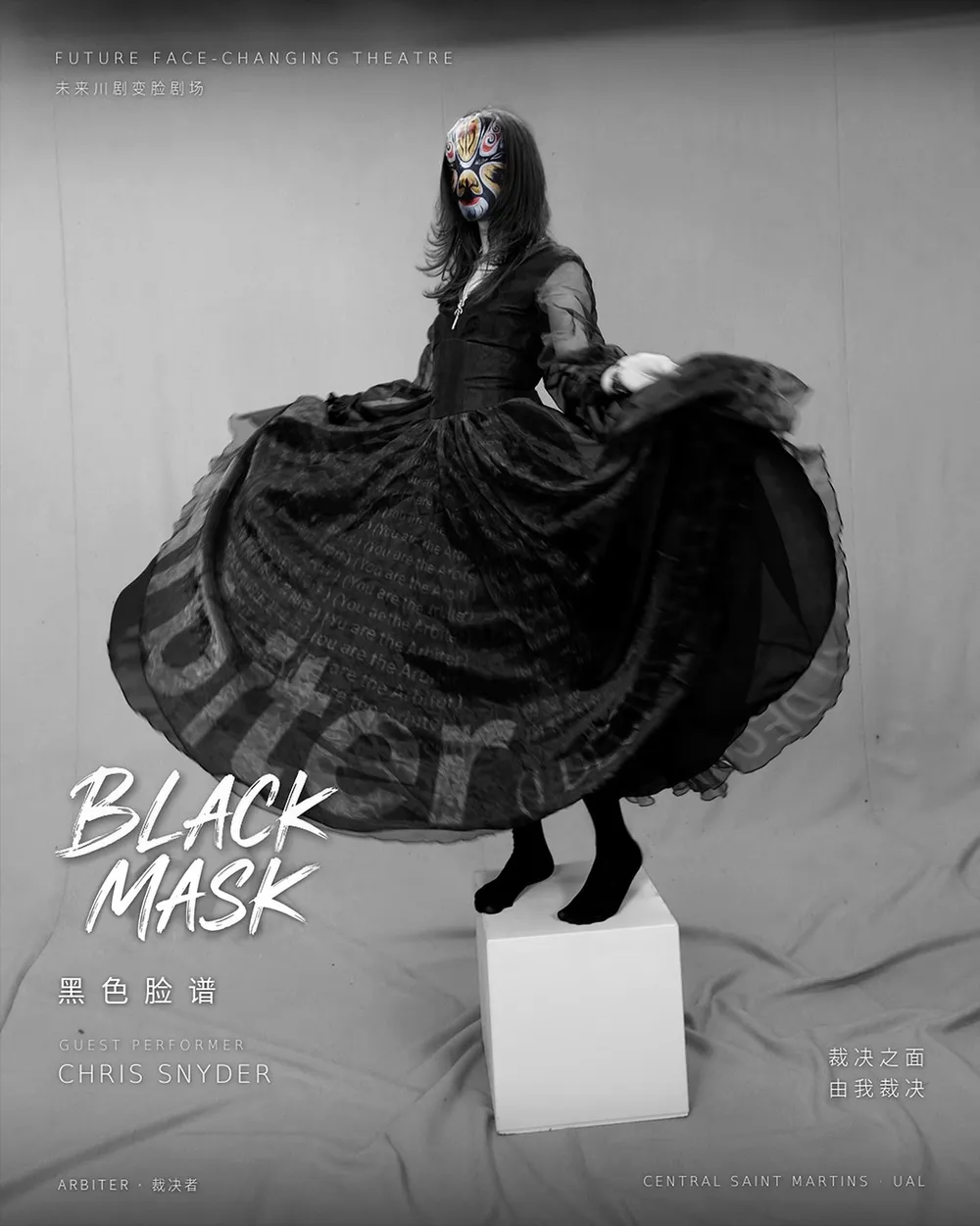
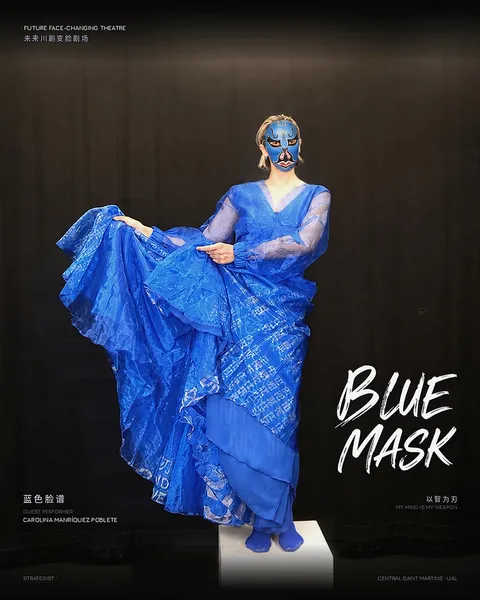
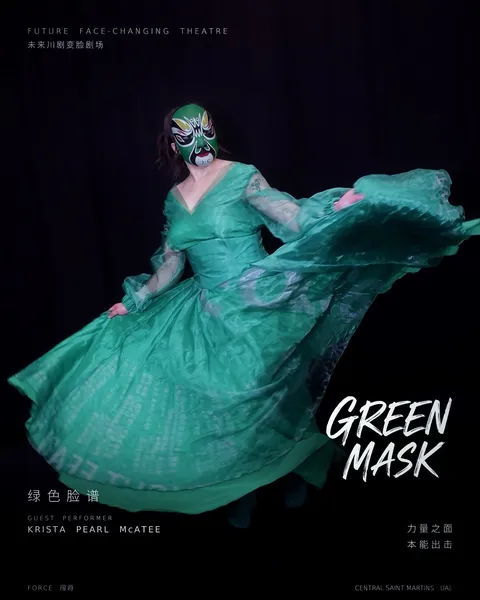
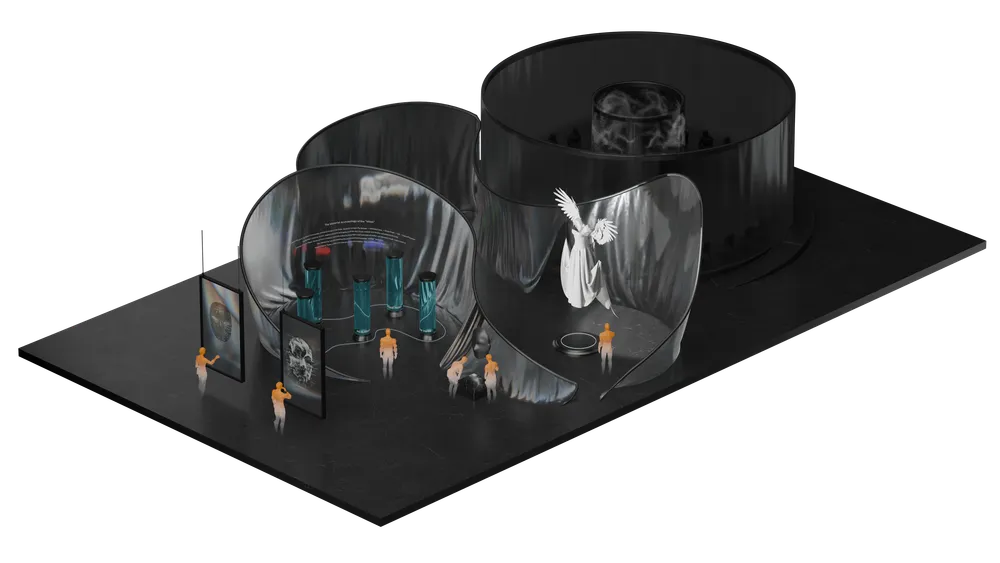
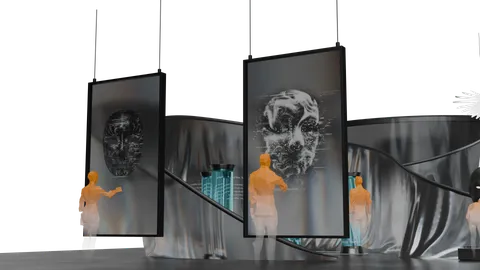
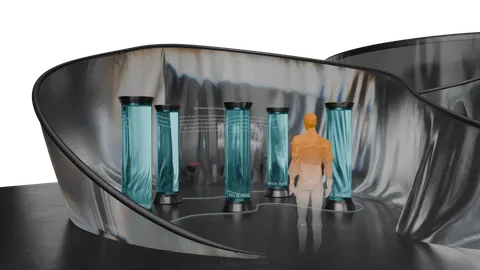
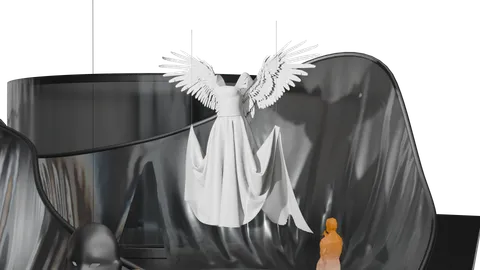
The work developed into a connected narrative environment. Visitors enter through a facial-recognition and gesture-based identity portal, encounter the material evolution of face-changing masks, biomaterial experiments and costume installations, and finally enter a circular theatre for a live performance. The presentation on 18 June 2026 brought together my own face-changing performance and five guest performers, each embodying a different colour, attitude and form of identity.
As the first major work within Future Living Traditions, the project does not ask how technology can simply decorate heritage. It asks how new relationships between bodies, materials, spaces and audiences might allow a traditional practice to continue growing as a living contemporary cultural system.
| Practice | Future Living Traditions 01 |
| Year | 2025–2026 |
| Location | Chengdu and London |
| Live Presentation | 18 June 2026 |
| Venue | MANE Dome, Central Saint Martins, London |
| Context | MA Narrative Environments, Central Saint Martins |
| Format | Narrative environment, live performance, biomaterial research, costume, digital interaction and spatial design |
| Status | Completed first presentation / Ongoing artistic research |
Role & Credits — not yet published here; still being calibrated so that collaborative work is not presented as solo authorship.
Cultural Context
Sichuan Opera face-changing is often recognised through the spectacle of a performer transforming one mask into another in an instant. Yet it is not simply a visual technique. Its knowledge has historically been transmitted through embodied training, oral instruction and specific master–disciple relationships. What is passed on includes not only methods of performance, but also discipline, theatrical experience, cultural understanding and responsibility for how the practice is used.
The phrase “passed to men rather than women, and to insiders rather than outsiders” is widely associated with the transmission of face-changing. It reflects a historical system in which specialist knowledge was protected through male lineage, kinship and internal apprenticeship networks. In contemporary practice, however, it should not be understood as a single prohibition applied uniformly by every teacher or troupe. Attitudes towards gender and external learners now vary across individual lineages and contexts.
In the summer of 2025, I travelled to Chengdu for field research and became an apprentice of Kang Yong, beginning my own training in Sichuan Opera face-changing and live performance. As a female learner, I was not directly prohibited or rejected. My teacher’s willingness to teach me demonstrated that the boundaries of transmission are no longer entirely fixed and can shift through individual relationships and changing cultural conditions.
Access, however, does not mean that all barriers have disappeared. Face-changing remains a knowledge system structured through trust, apprenticeship and personal transmission. The route into the practice is not fully public, and learners must build genuine relationships before being accepted and entrusted with its knowledge. Female practitioners remain comparatively uncommon, while the public imagination of face-changing as a secret inherited by male insiders continues to shape how the tradition is understood.
Future Face-Changing Theatre therefore does not present tradition as a closed system that must simply be overthrown, nor does it reject the role of apprenticeship in protecting cultural knowledge. Instead, it asks how the boundaries of a living tradition might be renegotiated while retaining training, trust and cultural responsibility: who may learn, who may perform, who may interpret the practice, and who may participate in shaping its future.